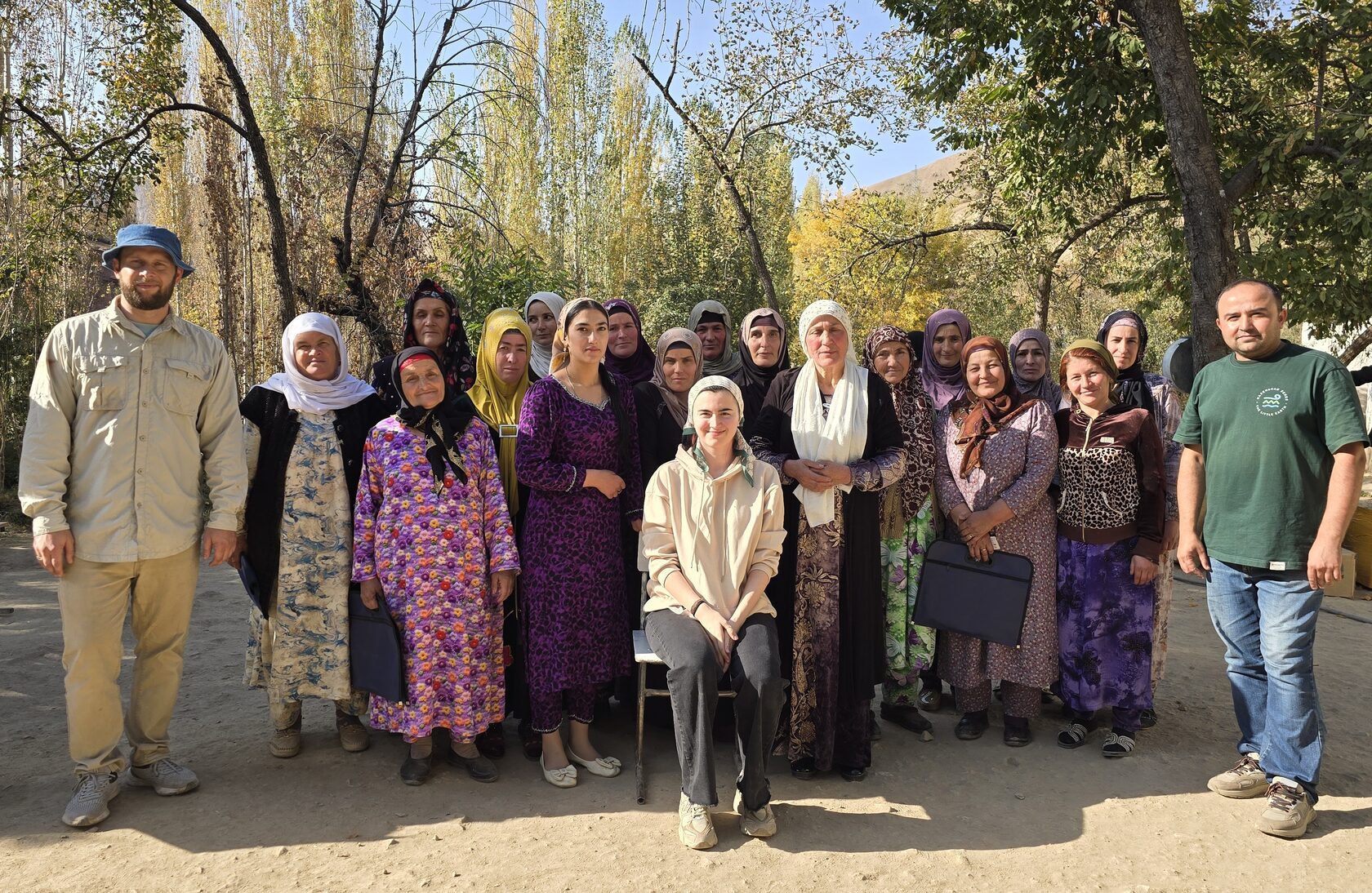
In the remote villages of Sayod and Hilmaghz, in the Romit district of Tajikistan, women are among the first to feel the impacts of climate change. Winters have gradually become harsher, forests thinner, and traditional fuel sources more difficult to find. Yet, despite these growing challenges, communities rarely connect these experiences to the broader climate crisis.
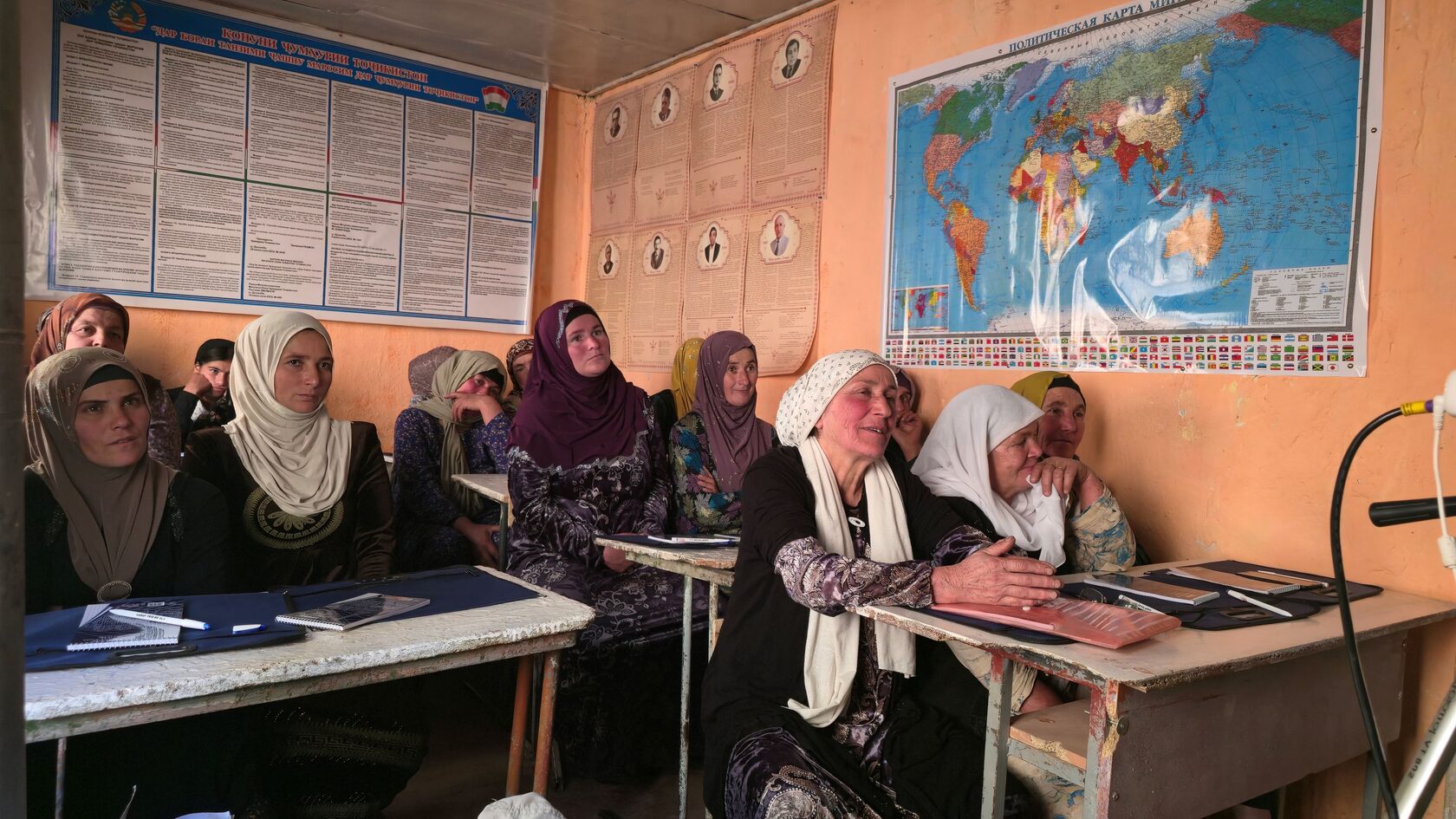
From 22 to 23 October 2025, Little Earth conducted a two-day workshop on climate change and sustainable energy for 20 women from these two villages. The workshop was organized within the project Decentralized Energy Solutions for Women’s Empowerment, supported by the Youth4Climate initiative. It was designed to increase knowledge on sustainable nature and to introduce tangible, renewable-energy solutions that can transform their daily lives.
During the sessions, women shared personal stories that brought the reality of climate change into focus. Some described how they now struggle to find firewood in nearby forests, walking further each year and carrying heavier loads back home.
One participant explained that “every year we must go further and further into the forest to collect wood. It takes a lot of strength.” Such insights revealed just how deeply the physical burden of energy access falls on women, even if the connection to climate change is not always clearly articulated.
From 22 to 23 October 2025, Little Earth conducted a two-day workshop on climate change and sustainable energy for 20 women from these two villages. The workshop was organized within the project Decentralized Energy Solutions for Women’s Empowerment, supported by the Youth4Climate initiative. It was designed to increase knowledge on sustainable nature and to introduce tangible, renewable-energy solutions that can transform their daily lives.
During the sessions, women shared personal stories that brought the reality of climate change into focus. Some described how they now struggle to find firewood in nearby forests, walking further each year and carrying heavier loads back home.
One participant explained that “every year we must go further and further into the forest to collect wood. It takes a lot of strength.” Such insights revealed just how deeply the physical burden of energy access falls on women, even if the connection to climate change is not always clearly articulated.
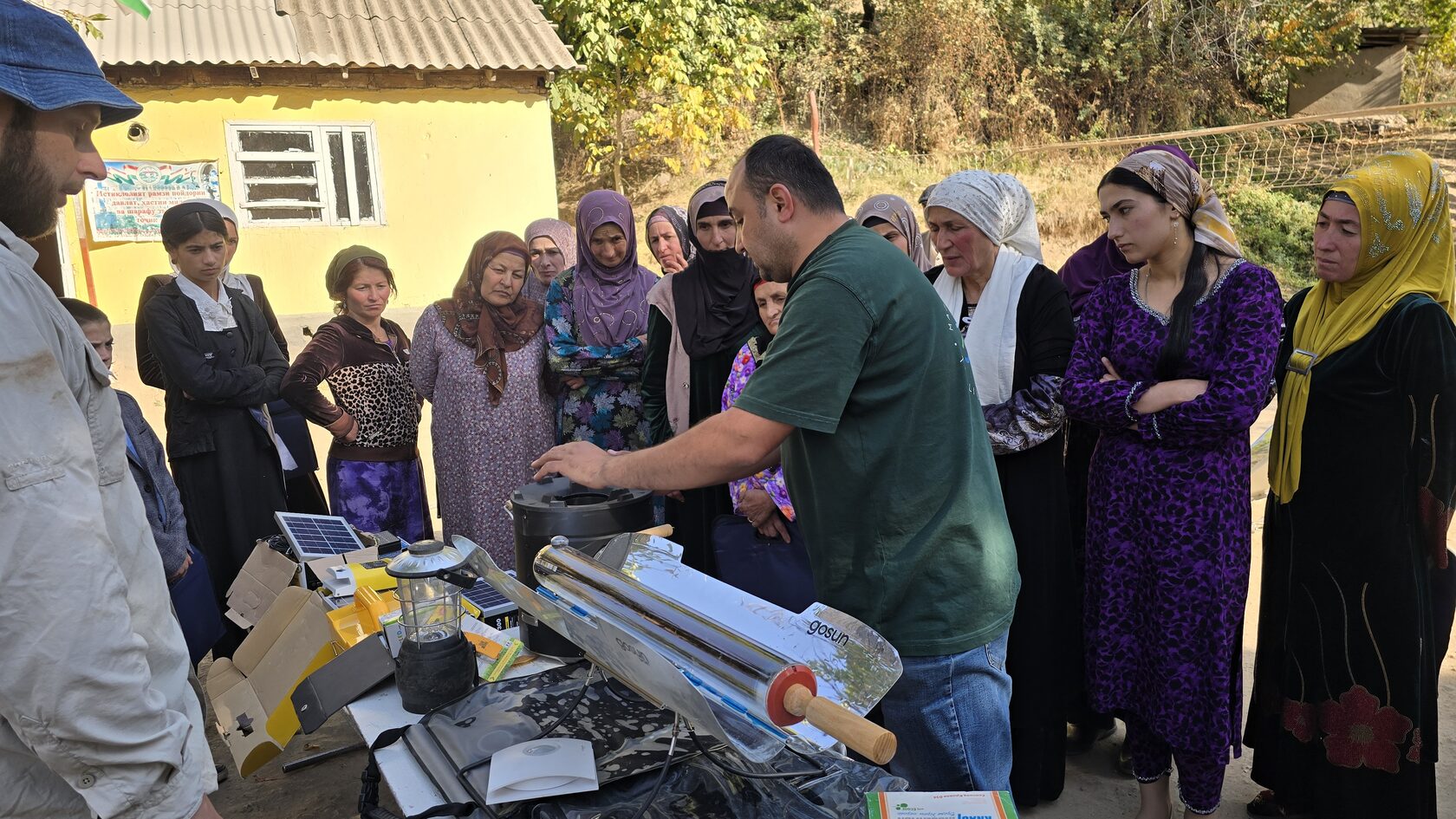
The second part of the workshop included the exhibition of solar and energy efficient equipment to illustrate the received knowledge on practice. Through hands-on demonstrations, the women were able to explore how these technologies work and imagine how they could become part of daily life. For many, this was the first time they had interacted with solar devices directly. Seeing the equipment in action helped transform the concept of sustainable energy from a distant idea into something attainable and useful.
In rural Tajikistan, women manage most of the household’s energy needs. They are responsible for cooking, heating, washing and caring for children, all of which require energy. When wood becomes scarce or coal becomes expensive, it is women who absorb the extra labor, health risks and time pressures. The project seeks to reduce that strain while also helping communities adapt to a changing climate.
“Our work focuses on supporting vulnerable rural women by increasing their capacity in sustainable natural resource management and introducing solar equipment that can make daily life easier while reducing pressure on the environment.” highlights Project Associate, Nuriya Aziz.
As a result of conducted activities, participants left with a stronger understanding of how their everyday experiences are connected to environmental change and how renewable energy can protect both household well-being and nature. Most importantly, they gained confidence to discuss these issues openly and consider new approaches.
The next step will be conducting a second training, focusing on gender equality and empowering them further within their communities. It is planned in November to strengthen leadership skills and deepen understanding of gender equality within climate action.
When women are empowered with knowledge and tools, change begins at home, and from there, it can extend across entire communities. In these mountain villages of Tajikistan, that change has begun.
Youth4Climate is an initiative of the United Nations Development Programme (UNDP) and the Italian Ministry of Environment and Energy Security. More information about the initiativecan be found here.
“Our work focuses on supporting vulnerable rural women by increasing their capacity in sustainable natural resource management and introducing solar equipment that can make daily life easier while reducing pressure on the environment.” highlights Project Associate, Nuriya Aziz.
As a result of conducted activities, participants left with a stronger understanding of how their everyday experiences are connected to environmental change and how renewable energy can protect both household well-being and nature. Most importantly, they gained confidence to discuss these issues openly and consider new approaches.
The next step will be conducting a second training, focusing on gender equality and empowering them further within their communities. It is planned in November to strengthen leadership skills and deepen understanding of gender equality within climate action.
When women are empowered with knowledge and tools, change begins at home, and from there, it can extend across entire communities. In these mountain villages of Tajikistan, that change has begun.
Youth4Climate is an initiative of the United Nations Development Programme (UNDP) and the Italian Ministry of Environment and Energy Security. More information about the initiativecan be found here.